Concrete sidewalk building in Monrovia CA - a walk that drains right and holds up
Walk cracked, uneven or holding puddles? We tear it out, pack a firm base and pour a new sidewalk that drains and holds up.
Request an estimate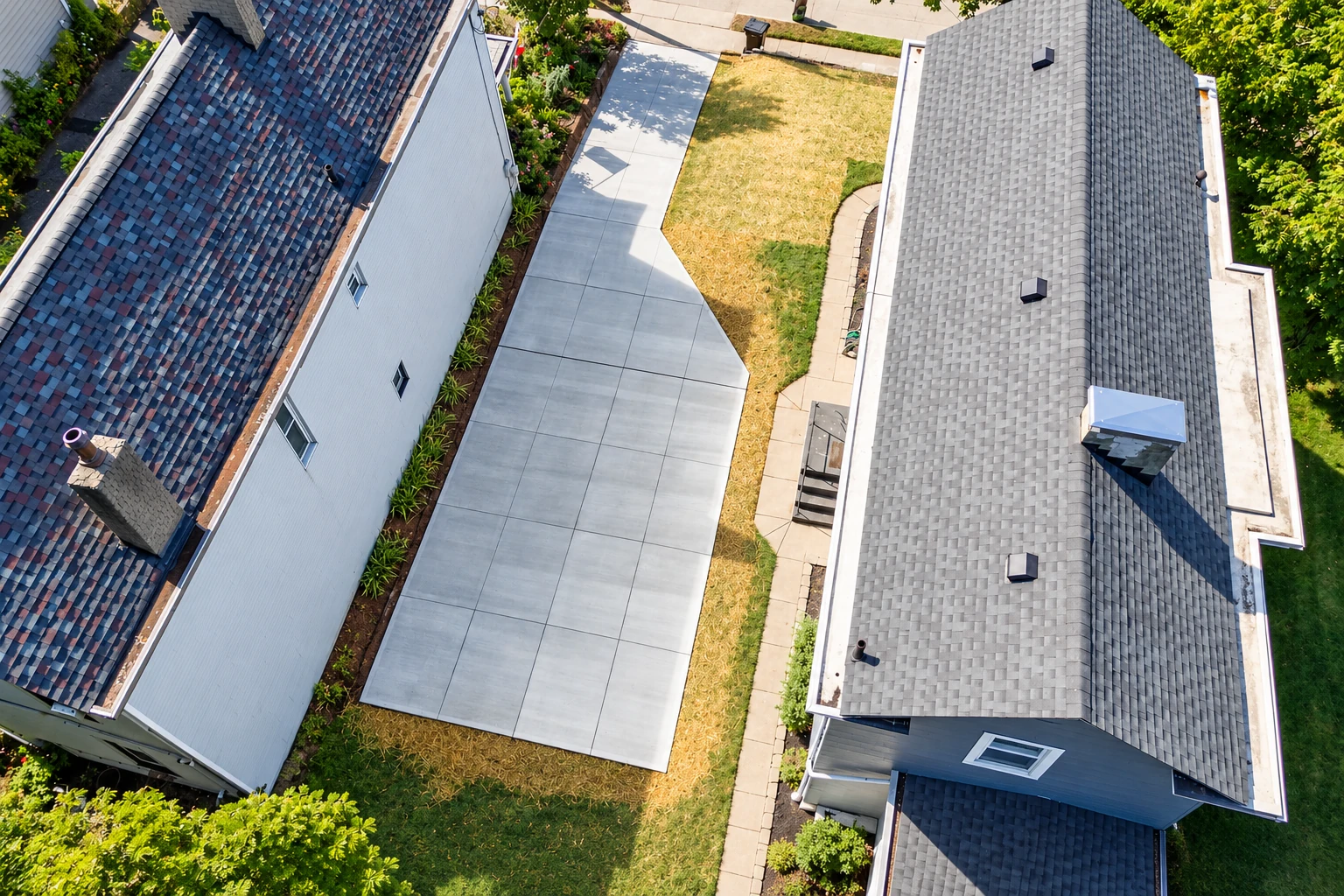
What does it take to build a new concrete sidewalk?
Concrete sidewalk building in Monrovia means packing a firm base and pouring a new concrete walk over it. At Monrovia Concrete we settle where water will run and where cars will cross before anything gets poured, so the walk drains and holds up.
Most people call when the old walk has cracked, gone uneven, sunk in spots or started holding water after the sprinklers run. The price mostly moves with the walk's length and width, whether there's old concrete to break out and haul away, how much digging the base needs and whether part of it has to carry cars. The schedule turns on whether your walk needs a permit and on the curing wait after the pour, and your own number comes from the estimate, where I measure the walk and write down what's included, like removal and hauling. We check with the city or county office that covers your address before we set a date, and if the walk ties into a worn-out driveway, we can talk about concrete driveway building on the same visit.
How our concrete sidewalk building works
I start by asking where cars will cross the walk, because that stretch has to be built for the weight from the start, not patched later. Then we check where water runs so the finished walk sheds it away from the house, break out and haul off any old concrete, and dig down to the subgrade, the soil the slab sits on. We backfill and pack the base instead of raking it level, since a raked base settles with the dirt and takes the walk down with it. We set the forms, pour, give the top a broom finish, a light brushed texture that keeps it from getting slick when it's wet, and cut control joints, the grooves that give the slab a planned place to crack. After the pour we keep the new concrete wet and covered while it cures, the slow hardening that decides how strong the walk ends up. If the budget's tight, I'll keep the finish plain before I'll cut corners on the base, because the base is buried on day one and it's the part that decides whether the walk stays put.
A walk usually leads somewhere. If it ends at a garage with a cracked or sinking slab, we can plan garage floor concrete alongside it so the two meet at the same height and drain the same way. If you want more than plain gray, decorative concrete adds color or a pattern without changing the base work underneath.
Building a concrete sidewalk in Monrovia
A sidewalk in any Monrovia street needs a city construction permit, whether it's new or rebuilt, and Monrovia Public Works issues and inspects those permits. Public Works takes applications in the order they come in and review can take up to two weeks, so whoever pulls the permit should apply early to keep the pour date. Street-side work also has to follow the city's mandatory street construction standards. The city wants a contractor working under its Encroachment Permit to hold a California Class A General Engineering license, and without one a C12 Earthwork and Paving license is typically required, though other license types may be accepted. The state adds its own rule, which says a job needs a state contractor's license if it needs a building permit, uses other workers or costs $1,000 or more in labor and materials. If your walk needs a permit, we sort out who pulls it and get it in hand before work starts.
Clay is the other thing we plan for. A homeowner guide from a California geotechnical association says clay soil swells as it soaks up rain or sprinkler water, with enough force to crack concrete, so before we pour we look at where the sprinkler heads spray and where the walk runs along planted beds. We're based in Monrovia and work across the San Gabriel Valley, and we plan around sprinkler lines the same way on walks in Arcadia and Pasadena.
Concrete walks, start to finish
Get a sidewalk estimate at your property
We reply within one business day to set a time for me to come out. The estimate is free, done at your property, and there's no obligation to book.
(626) 879-0614Monrovia sidewalk questions we hear
How much does a concrete sidewalk cost in Monrovia?
Concrete sidewalk in the Los Angeles area usually costs about $5.50 to $11 per square foot, and that's the going rate around here, not a quote from us. Where a walk lands in that range usually comes down to tearing out old concrete, how much base work the ground needs and whether part of it has to be built heavier for cars. Your own price comes from the estimate.
Do I need a permit to build a sidewalk in Monrovia?
A sidewalk in any Monrovia street needs a city permit, and some walks on private property are on the city's list of work that needs no permit. That list covers walks no more than 30 inches above the ground next to them, with no basement or story below, and not on a route that has to be wheelchair accessible. We check your walk with the city before we set a date.
What causes cracks in a new concrete sidewalk?
Concrete usually cracks somewhere as it shrinks and the ground under it moves, and joints decide where it cracks, not whether it does. Guidance from a Michigan concrete association makes that point, which is why we cut control joints and can show you on the layout where they'll fall. Wet clay swelling under the slab, the sprinkler problem mentioned above, is another common cause.
How long does a new concrete sidewalk take to cure?
At least 7 days, according to one concrete maker's hot-weather guide, because concrete that isn't cured well can crack and end up weaker and less durable. Plan on that week after the pour as part of the job, since it shapes how long the walk lasts, and it's why we keep the new concrete wet and covered. Our work is backed by our satisfaction guarantee.
How thick should a concrete sidewalk be?
Guidance from a Michigan concrete association treats four inches as the typical thickness for a sidewalk. The same guidance says walks may be built thicker where a driveway crosses them or heavier vehicles drive over them, so point out where cars will cross when I come out and we'll plan that stretch from the start.
What's the best way to pour concrete in hot weather?
National hot-weather guidance says to place and finish concrete outside the hottest part of the day when possible, and not to sprinkle water on the surface to make finishing easier. Both habits protect the top of the slab, which can turn weak and dusty when it's rushed in the heat or watered down. It's a fair thing to ask any contractor what time of day they plan to pour.
Plan your Monrovia sidewalk with us
Call (626) 879-0614 or use the form, and have the walk's rough length and width, a few photos and whether it meets the street or a driveway, so I know what to look for when I come out.