Concrete driveway building in Monrovia CA - a slab that drains toward the street
Cracked, sinking or puddling driveway? We tear it out and pour a new concrete slab sloped to carry water away from your house.
Request an estimate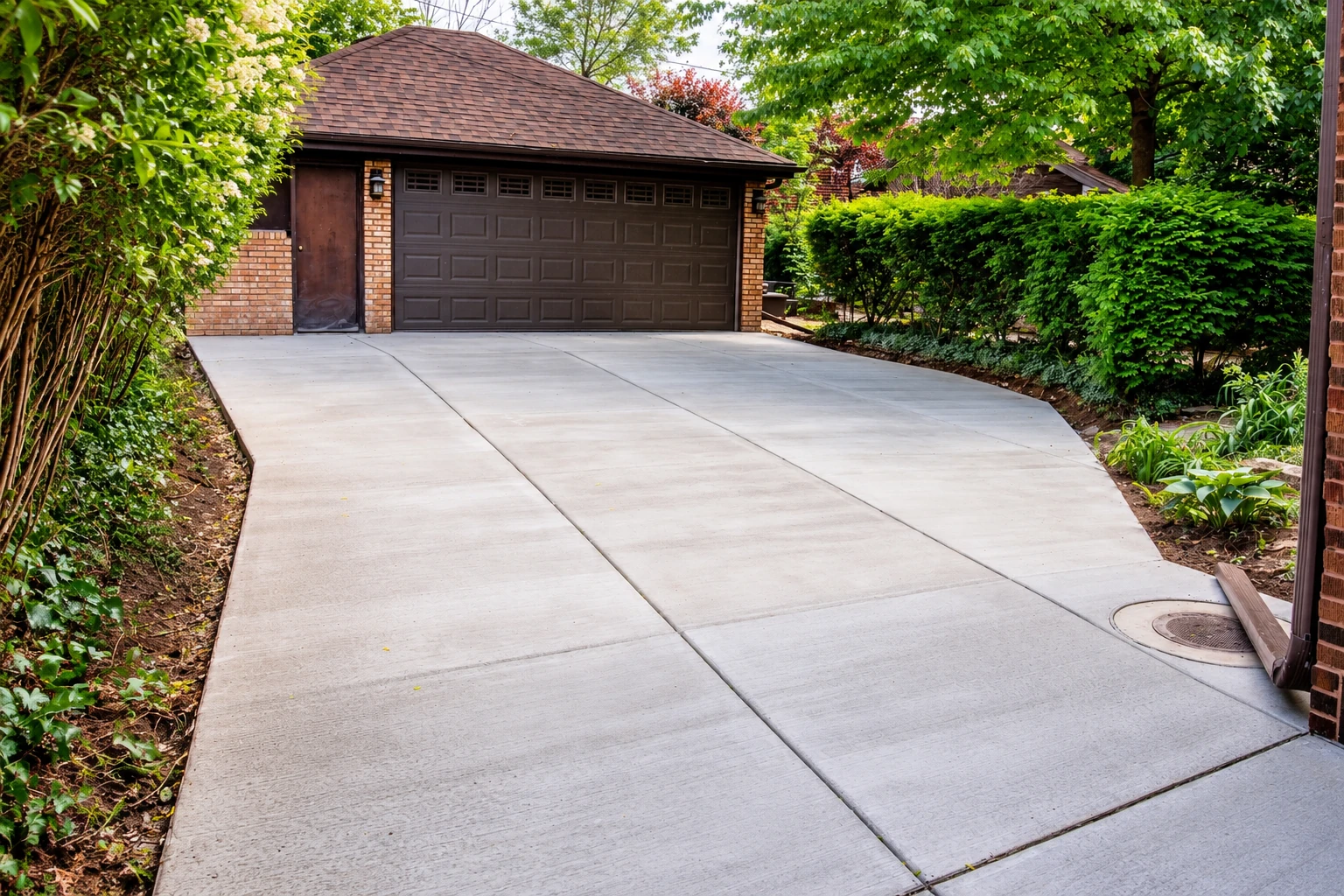
What does a new concrete driveway in Monrovia involve?
Concrete driveway building in Monrovia means taking out the old drive, digging down to firm ground, packing a solid base and pouring a new concrete slab shaped so rain and hose water run off to the street instead of pooling by your garage. Most of the time you're without a driveway is the cure after the pour, not the work itself.
Most people call us when the old drive has cracked through, sunk at one end or holds a puddle every time it rains. The price mostly turns on the size of the drive, how much old concrete we break out and haul away, how thick the slab needs to be for what you park, how much digging and base the ground needs, and whether the work reaches the curb. The schedule turns on that same street question, since the city may need to sign off first, and on the cure after the pour. Your estimate puts all of it in writing, removal and hauling included, so you know exactly what the price covers.
Concrete driveway building, start to finish
We start by asking what you park and where you want the water to go, because that sets the thickness and which way the slab falls. Then we break out the old concrete, dig down to firm subgrade, the ground the new slab sits on, and pack a base over it instead of raking loose dirt level, because a slab on unpacked dirt settles right along with it. We set the forms so the slab slopes away from the house and garage, lay rebar, steel bars that hold the slab together if it does crack, and pour early in the day when we can, since concrete that bakes in midday heat can end up with a weak, dusty top. Once it's floated smooth we pull a broom across it, and that light texture gives tires and shoes some grip when it's wet. Control joints are grooves we cut so the slab cracks along a straight line we picked, and we cut them before the concrete has a chance to crack on its own, then set joints where the drive meets the garage and the walk. After that the concrete cures, which just means it sits and gains strength before anyone drives on it. If the budget's tight, cut the finish, not the base. Nobody sees the base on day one, but it decides whether your drive stays flat.
A new drive is a good time to pour the slabs that tie into it. If you've wanted a concrete patio off the side of the house, we can form it while the old concrete is already coming out, and if you'd like the drive or its borders to look like stone or brick, stamped concrete presses that pattern into the top before it sets.
Concrete driveway building in Monrovia when the work meets the street
If your new drive reaches the street, the City of Monrovia has a say in it. The city issues the permit for building or rebuilding a driveway in a city street, curb cut clearance comes from its Public Works Department, and the city caps how many curb cuts a house can have. Applications are reviewed in the order they come in and can take up to two weeks, so we start on the city side early to keep the pour date. For street work under the city's encroachment permit, the city asks for a contractor holding a state Class A General Engineering license, and says a C12 Earthwork and Paving license is typically needed otherwise for digging and paving, so we sort out who pulls the permit and have it in hand before work starts. Whether the part of the drive on your own lot needs a permit is a question for the city's Building Services at (626) 932-5581, and we check with them before we set a date.
We're based in Monrovia and work across the San Gabriel Valley, and plenty of the drives we replace run back to a detached garage with the low spot right at the garage door, or were poured on raked dirt that's since dropped. We dig those out and set the fall toward the street, and we run into the same long, narrow drives on jobs in Pasadena and Sierra Madre.
Concrete driveway work up close
Get a written estimate for your new driveway
We reply within one business day to set a time to come out, measure the drive and write down what the price covers, removal and hauling included. The estimate is free and done at your property, and there's no pressure to book.
(626) 879-0614Monrovia driveway questions we hear
Can I have an asphalt driveway in Monrovia?
No, Monrovia doesn't allow asphalt driveways at single-family homes. The city requires driveways and parking spaces to be paved with concrete or an alternative it approves, so the choice is between those. We pour concrete, and stamping or color can give it a different look if plain gray isn't what you want.
How much does a new concrete driveway cost in Monrovia?
A 4-inch concrete slab, installed, usually costs about $12 to $17 per square foot in the Los Angeles and Orange County area. That's the going rate around here, not our quote, and your drive moves up or down with tear-out, thickness, how much base the ground needs and whether the work reaches the street. We measure your drive and write down what the price covers, and the work is backed by our satisfaction guarantee.
How do I choose the right thickness for a concrete driveway?
Start from what you park, because a 4-inch slab is the usual starting point for cars, and heavier loads or weak ground can call for a different design. By a state concrete association's numbers, going from 4 to 5 inches adds roughly 20% to the concrete cost and nearly 50% to the weight the slab can carry. Tell us about the truck, camper or trailer and we'll size the slab for it.
How long do I have to wait to drive on a new concrete driveway?
Plan on at least a week before you drive on it, because new concrete should cure that long before it takes a car's weight. Walking on it comes sooner, and we'll tell you when on pour day. Most people line up street parking or a neighbor's drive for that week.
Do I need a soils engineer before pouring a driveway?
If you're not sure what your ground does, a soils engineer is the one who can tell you. Guidance written for western states notes many of them have expansive soil, clay that swells when wet and shrinks when dry, and calls for crushed rock under the slab at a depth set by how expansive it is. If what we find when we dig out looks off, we'll tell you before we pour.
What should I ask a concrete contractor before they pour my driveway?
Ask where the water will run once the slab is in, and ask for a jointing plan in the written proposal. The usual advice is a plan with an isolation joint, a break that lets two slabs move separately, wherever the drive meets a sidewalk, the garage floor or other paving. Ask us both at the estimate and we'll walk you through it.
Plan your new Monrovia driveway today
Our phones are open until 11 PM on weekdays and from 6 AM on weekends, so call (626) 879-0614 whenever you're out looking at the cracks.