Concrete retaining walls in Monrovia CA - a wall that drains and holds your slope
Slope slumping into your yard or an old wall leaning after rain? We build reinforced concrete walls with real drainage behind them.
Request an estimate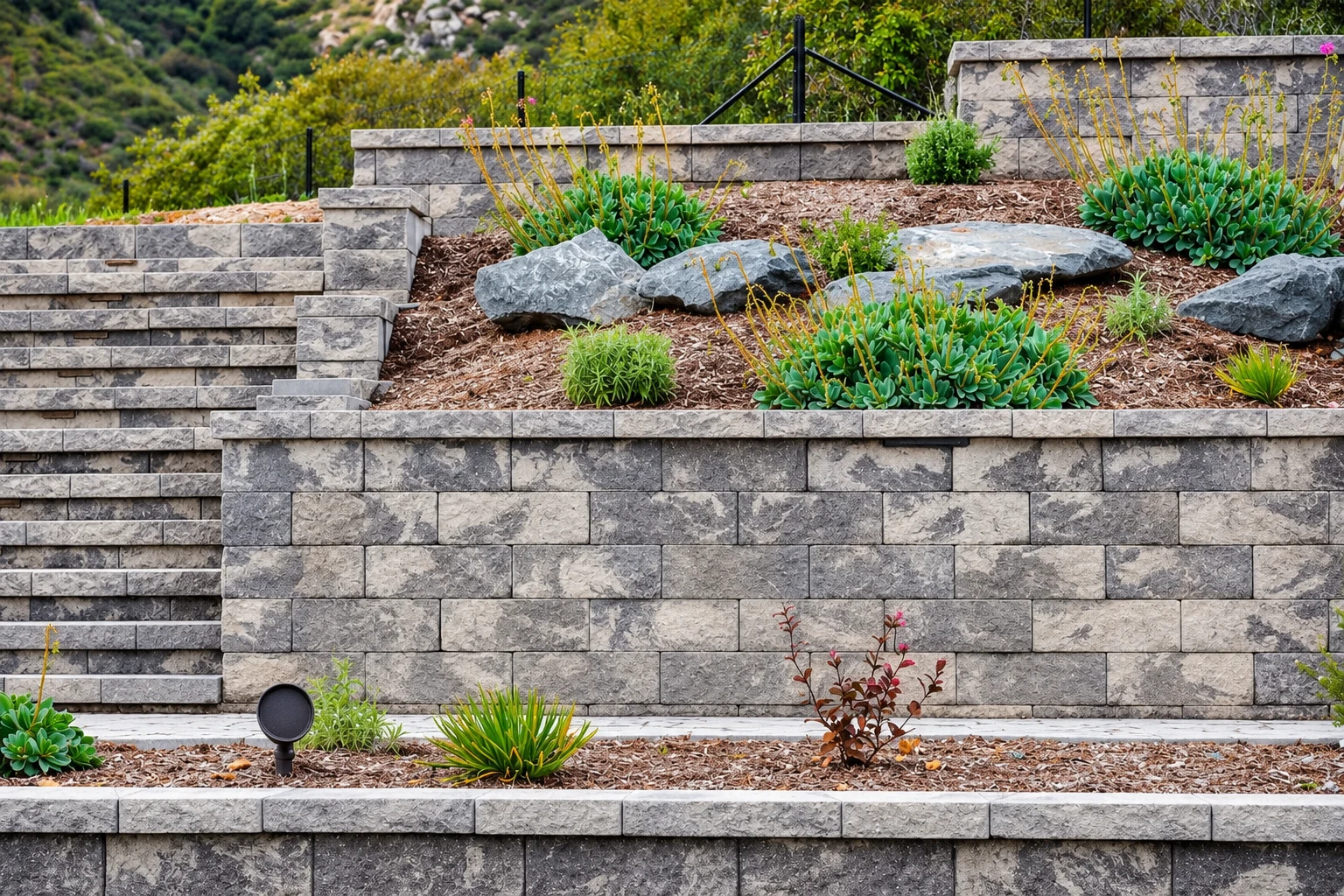
Does your slope need a concrete retaining wall?
A concrete retaining wall holds back soil where your Monrovia yard changes level, so the slope stops creeping onto your patio, driveway or house and rain has a planned way out from behind it.
Most calls start with something you can see, like dirt washing across the walk after a storm, a cut bank that keeps sloughing off, or an old block or timber wall that's started to lean. If that slope sits above a concrete patio or a driveway, the soil and water end up on the slab, so the wall usually has to come first. The price moves mostly with the wall's height and length, then with how much digging, drain work and hauling it takes and whether we can get equipment to the spot. The schedule turns on whether the city wants to review the wall and on curing, the wait while the concrete gains strength before soil goes back against it. When I come out, I measure it and write down what's included, like removal and hauling, so you know what your price covers. We also check with the city before we set a date.
How we build a concrete retaining wall
Drainage behind the wall gets most of our attention, because that's what makes a wall fail. I start at the top of the slope and look at where the rain comes from and where it can safely go. Then our crew digs out for the footing, the wide concrete base the wall stands on, and sets rebar, the steel bars that let the wall take the soil's push without cracking apart. We form and pour the footing and the wall, let the concrete cure, and then lay drain rock and a perforated pipe behind it so water runs out to a planned spot instead of soaking in and pushing. The soil goes back in layers, packed as we go, and we haul off what's left.
A wall often turns a slope into flat ground you can finally use, and that's when the next project comes up. We pour concrete pool decks and slabs through our concrete floor installation work on that new ground, and we plan their drainage together with the wall's so the slab doesn't send water back toward it.
Building concrete retaining walls on Monrovia hillsides
Monrovia's grading code calls for retaining walls, built to the Building Code, wherever they're needed to keep a dug or filled slope within its allowed limits, so on a lot that's been cut into, the wall is part of the grading and not just a yard feature. On one hillside home here, the city's Hillside Development Permit named a wall more than six feet high along with grading of five feet or more of cut and fill, which is the soil dug out and brought in to shape the lot. That was one project, not a height rule for every wall, but it shows the kind of wall the city looks at closely. The city's permit page also says it's best to check with the Planning Division about zoning before you apply, which is why, on taller walls or hillside lots, we get the city involved before the design is set.
Many of the walls we're called about here hold back foothill yards, where winter rain runs down the slope and collects behind whatever stands in its way, so I trace that water from the top before we plan the drain. We're based in Monrovia and work across the San Gabriel Valley, and we see the same steep yards and storm runoff on jobs in Sierra Madre and Pasadena.
Concrete retaining walls up close
Get a retaining wall estimate at your property
We reply within one business day and set a time for me to come out, walk the slope and measure the wall. The estimate is free, and there's no obligation to book.
(626) 879-0614Retaining wall questions from Monrovia homeowners
What is the best type of concrete retaining wall for my slope?
For walls under about 4 feet, a gravity wall usually wins on cost and simplicity, while cantilever walls come into play between roughly 4 and 20 feet. So the height you need shapes which wall a quote offers and what it costs. I'll measure the change in grade when I come out and tell you which one fits.
What causes a concrete retaining wall to fail?
Poor drainage is by far the most common reason walls that hold back earth don't perform, which is why we plan the drain before anything else. Water that can't get out from behind a wall adds weight and pressure the wall has to fight. When you compare quotes, ask each contractor how the water behind the wall gets out.
Do I need a permit for a retaining wall in Monrovia?
Your wall may need one, and the city's Building & Safety staff are the ones who decide whether it needs plan review. We check with the city or county office that covers your address before we set a date, and if a permit is needed, we sort out who pulls it and have it in hand before work starts.
How much does a concrete retaining wall cost in the Los Angeles area?
Concrete retaining walls in the Los Angeles area usually cost about $20 to $45 per square foot. That's the going rate around here, not our quote, and where a wall lands in that range depends mostly on its height, the digging and the drain work. I'll measure your wall when I come out so you get your own number.
How close to a hill can you build a concrete retaining wall?
A cantilever wall needs room behind it to dig and pour its footing, so it can only sit so close to an existing slope before the soil needs temporary shoring, which is bracing that holds the dirt back while the crew digs. If your slope is tight to a fence or the house, I look at that first, because it changes both the plan and the price.
How do I check if my Monrovia property is in an earthquake hazard zone?
You can look up your address in the state's EQ Zapp map, which shows whether a property is in an Alquist-Priolo earthquake fault zone, a seismic hazard zone, or both. Projects on land in a mapped liquefaction zone, where shaking can make wet soil act like a liquid, or in an earthquake-induced landslide zone may have to study that hazard and reduce it during local permitting. If your lot shows up, tell me when you call so we can plan for it with the city.
Get your Monrovia retaining wall looked at
Call (626) 879-0614 or use the form, and if you have photos of the slope from the last heavy rain, send them along, because they show us where the water really goes.